



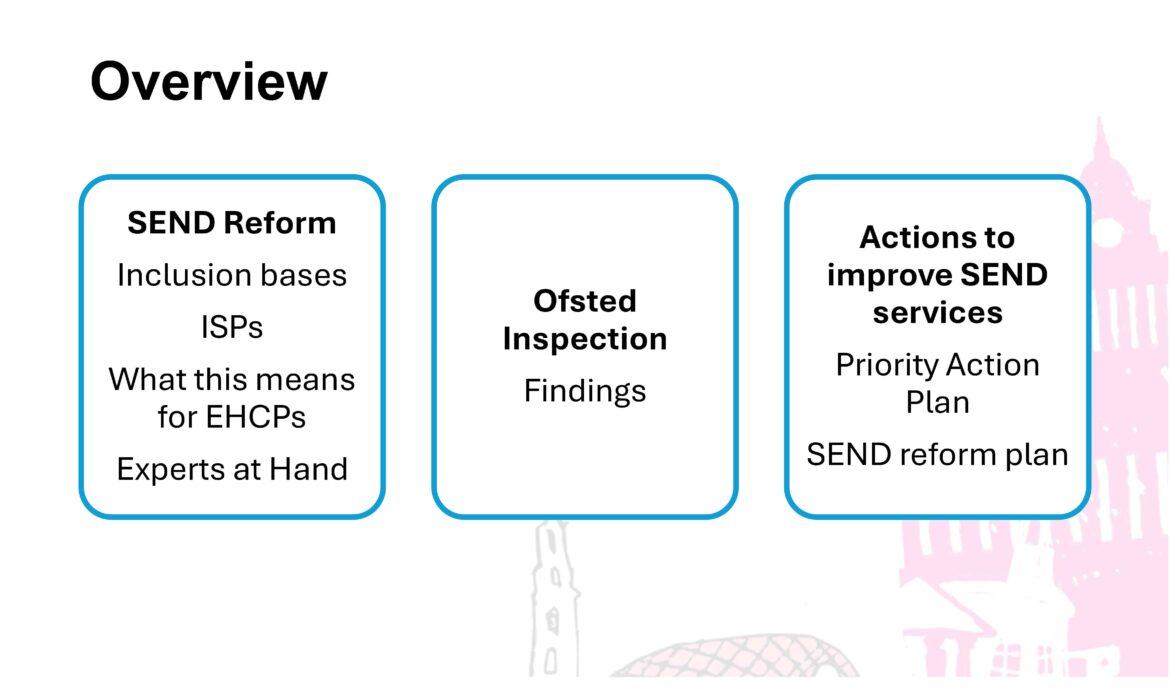
On 15th October, Leeds Parent Carer Forum and the Voice, Influence and Change Team brought parent carers together at Pudsey Civic Hall for an event looking at the next steps for SEND in Leeds. The session covered the proposed national SEND reforms, the recent Ofsted/CQC area SEND inspection and the work now taking place in Leeds to improve SEND services.
Amber Burton from Leeds City Council talked through the proposals and the local improvement work, but the event was very much a two-way conversation. Parent carers asked questions, challenged what they heard and shared their experiences of the SEND system as it is working now.
SEND reform: change is coming, but many details are still unclear
The national proposals include a greater emphasis on inclusion in mainstream education, Individual Support Plans (ISPs), Inclusion Bases and increased access to specialist expertise through a new Experts at Hand model. EHCPs would remain, although there are proposals for changes to how they operate in the future.
A clear message from the discussion was that there is still a lot we don’t know. Parent carers asked important questions about the legal status of ISPs, rights of appeal, school accountability and how children would access different levels of support. Many of these details have not yet been confirmed.
Crucially, the current SEND system remains in place while the reforms are developed. The presentation confirmed that the proposed reformed system would require changes to the law and is not expected to come into effect until September 2029, with no changes to support received through EHCPs before at least September 2030.
What parent carers told us
Although the proposed reforms generated plenty of questions, much of the conversation came back to something more immediate: families need the current system to work better now.
- Long waits and delays in the EHCP process, and the impact these can have on children’s education and family life.
- Children who are struggling to access education or whose needs are not being recognised.
- Concerns about accountability when things go wrong in schools.
- Communication between services and families.
- Parents feeling blamed, dismissed or not believed when they raise concerns.
- Lengthy waits for SEND Tribunal hearings.
- Gaps in provision, including for children who struggle in large mainstream environments.
- The financial and wider impact on families when a child cannot access suitable education or support.
There was also recognition that continually asking individual parents to fight through complaints and other processes can itself create a barrier. Parents described already being exhausted by caring responsibilities and navigating services, and questioned how families in those circumstances can realistically be expected to repeatedly challenge the system.
That is an important message for us as a Parent Carer Forum.
Improving SEND in Leeds now
Alongside national reform, Leeds is responding to the findings of its Ofsted and Care Quality Commission area SEND inspection. Priority actions include the quality and timeliness of EHCPs, neurodevelopmental pathways and wider whole-system improvement. Other identified areas for improvement include communication and coproduction with parents and carers.
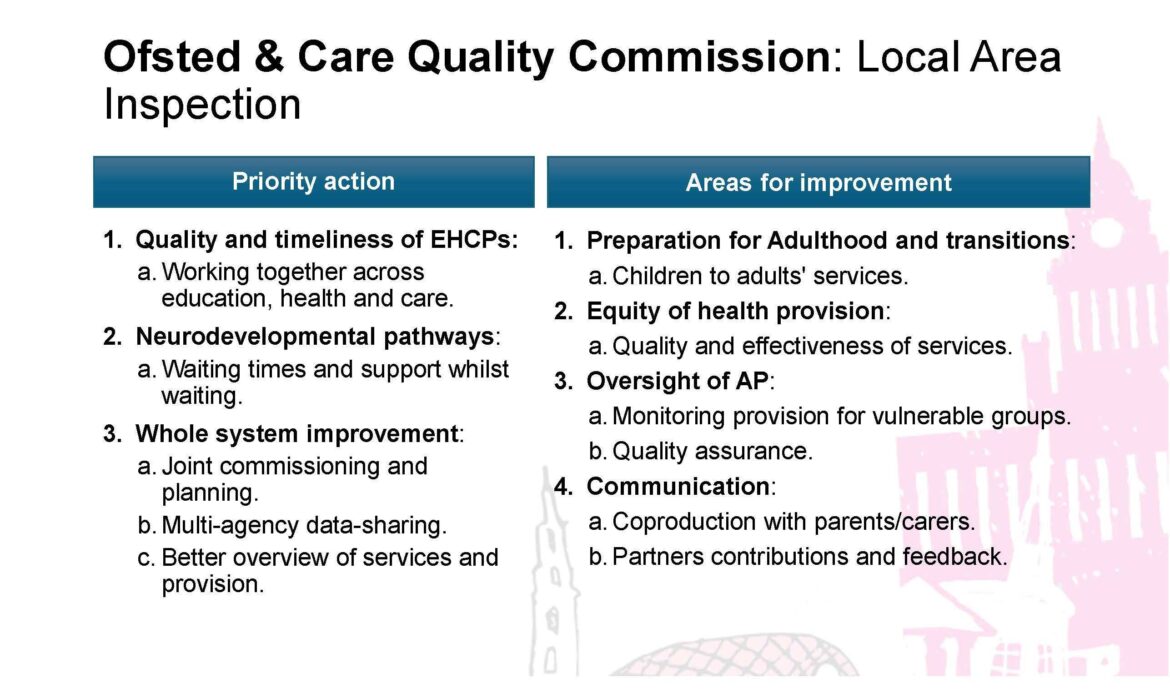
We heard that work on the current system and preparation for future reform need to happen alongside each other. This includes addressing existing service pressures, progressing the post-inspection priority action plan and developing new approaches such as Experts at Hand.
One particularly strong discussion concerned EHCP delays. Families spoke about the consequences for children who are waiting for assessments, provision or suitable education. An action from the event was for the PCF to follow up with the council about clearer communication on how the EHCP backlog is being addressed.
Coproduction has to mean listening and acting
Another theme running throughout the event was the importance of genuine coproduction. It was acknowledged during the discussion that, although the PCF is involved strategically, coproduction is not yet routinely embedded across individual services. Amber Burton described the need for a wider culture change so that engagement with children, young people and families becomes part of everyone’s role rather than something undertaken separately.
For us, this is particularly important. Our role isn’t simply to attend meetings. It is to make sure that the experiences parent carers share with us are heard by the people making decisions, to identify the themes affecting families across Leeds, and to keep challenging and following up when changes have been promised.
Keep sharing your experiences
You didn’t need to be at this event for your experience to matter. We want to hear from families about what is working well, what isn’t working well, and what could be better. And it is equally important that we hear when
something is working. Understanding good practice helps us advocate for more families to receive the same experience.
YOUR VOICE MATTERS. Share one experience, one issue or one suggestion. It does not need to be a long account. Your feedback helps us identify themes and take the collective voice of Leeds families into SEND discussions.
Feedback gathered through our Padlets is one of the ways we identify recurring issues and take parent-carer experiences into SEND discussions in Leeds.
The message we took away from the event was clear: there is significant change ahead, but families cannot wait for future reform for things to improve. Children and young people need the SEND system in Leeds to work better now.
We will continue to represent what families tell us, challenge where things aren’t working, highlight good practice where it is, and feed back on what happens as a result.
Further information and resources
- Next Steps for SEND in Leeds: presentations slides from the 15th October event.
- Leeds SEND Youth Council: a group of young people aged 11 to 25 years old with special educational needs and disabilities (SEND) who live in Leeds or attend school in Leeds.
- Leeds Local Offer Issues Tracker : The issues tracker shows the issues raised by parents, carers, and support groups, what the council and health services say about these issues and what plans are in place to make things better.
- How children and young people have a voice and influence in Leeds: Listening to and responding to “the voice of the child” is one of the 4 key behaviours that underpin Leeds’ citywide approach to supporting children and young people .
- SEND Improvement: This page brings together key information, plans and updates relating to SEND improvement and reform activity across the Leeds local area partnership.